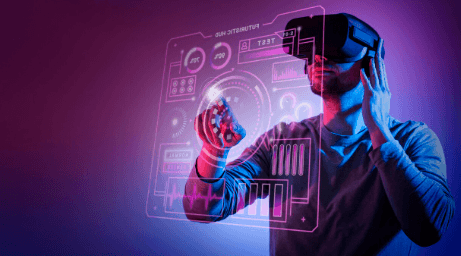

The future of game development systems centers on AI-driven pipelines and cloud-native collaboration. Teams share components, tokens, and procedural patterns across environments, enabling rapid prototyping with decoupled core capabilities. Real-time worlds demand responsive tech and immersion analytics to guide iterative work. Governance balances player agency with measurable impact, while ethical optimization sustains responsible innovation. The path invites cross-disciplinary partnership and transparent collaboration, inviting stakeholders to consider what comes next as constraints loosen and ambitions converge.
What’s Driving the Next Wave of Game Dev Systems
The next wave of game development systems is being driven by a convergence of real-time rendering advances, modular toolchains, and data-driven pipelines that empower teams to prototype, iterate, and ship faster.
This momentum enables procedural storytelling and ethical optimization, guiding creators toward experiences that respect player agency, balance performance with accessibility, and foster collaborative, freedom-centered ecosystems where innovation thrives beyond individual agendas.
AI-Driven Pipelines and Cloud-Centric Collaboration
Scaling pipelines and cross cloud collaboration unlockes unified workflows, resilient delivery, and shared ownership of quality. The vision emphasizes freedom-oriented collaboration, measurable impact, and transparent governance, driving creative autonomy through interoperable, cloud-native tooling and collective responsibility for end results.
Modular Toolchains for Faster Prototyping
Modular toolchains enable rapid prototyping by decoupling core capabilities from bespoke implementations, allowing teams to assemble and reassemble functionality as ideas evolve.
They foster design tokens-driven consistency, streamlined asset pipelines, and reusable patterns for procedural generation.
Runtime scripting empowers rapid experimentation, enabling cross-disciplinary collaboration, measurable outcomes, and scalable iteration without rigidity, unlocking freedom to explore innovative game concepts and deliverables.
Real-Time Worlds: Responsive Tech for Immersion
Real-Time Worlds harness dynamic systems that respond to player input and environmental context, elevating immersion beyond pre-scripted sequences.
In this vision, developers co-create adaptive environments where immersion analytics guide iteration, ensuring meaningful engagement.
The approach emphasizes latency optimization to sustain seamless interaction, enabling rapid testing, shared feedback loops, and scalable ecosystems.
Outcomes-focused collaboration propels freedom-oriented design, delivering responsive experiences that evolve with player agency.
See also: The Future of Gaming Experiences
Frequently Asked Questions
How Will Cross-Platform Parity Evolve for Indie Studios?
Cross platform parity for indie studios will improve as evolving toolchains streamline deployment, with standardized runtimes and collaborative ecosystems enabling rapid iteration; runtime optimization and shared abstractions empower creators, delivering freedom, fairness, and scalable, outcome-focused development across platforms.
What Are the Biggest Accessibility Barriers in Next-Gen Tools?
Accessibility barriers for next gen tools persist as a critical challenge; user onboarding friction highlights how onboarding must evolve. The vision emphasizes collaborative ecosystems, empowering creators with intuitive interfaces, accessible documentation, and shared workflows that unlock freedom and universal participation.
Will Open-Source Components Dominate Paid Engine Ecosystems?
Open source components increasingly shape paid game engines, as licensing models adapt and open collaboration accelerates innovation, yielding a 60% faster prototyping statistic; stakeholders foresee a future where open source and proprietary tools coexist, empowering freedom-loving developers.
How Will AI Affect Creative Decision-Making vs. Automation?
AI driven iteration accelerates creative decision-making while automated tooling handles repetitive tasks; human creativity remains central, guided by ethical boundaries. Visionaries collaborate, balancing freedom with responsibility, ensuring outcomes that empower developers and sustain innovative, ethically sound progress.
What Security Risks Accompany Cloud-Based Game Development Workflows?
Cloud-based development introduces security risk and accessibility barriers, yet enables cross platform parity for indie studios; open source vs paid engines shapes dominance. AI impact shifts creative decision making vs automation, while next gen tools unlock freedom and collaboration.
Conclusion
In the theater of tomorrow, the engine is a pulse, syncing diverse minds as one. Tokens become compass points, guiding teams through fog toward concrete worlds that breathe and learn. Tools unfold like modular petals, each prototype a seedling of broader impact. Real-time feedback reframes risk as resonance, progress as performance, governance as shared gravity. Collaboration sparks a braided constellation—ethical, ambitious, transparent—until players’ freedom and systems’ discipline orbit a common horizon: creation that endures, together.


 By
By