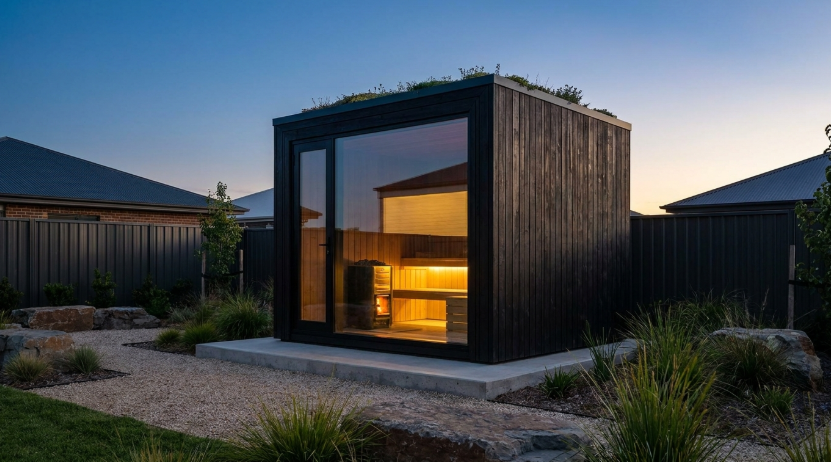

The five most common cabin sauna buying mistakes are undersizing the heater for the cabin’s cubic footage, forgetting the $500 to $1,500 cost of a dedicated 240V electrical circuit, skipping a check of local zoning and permit rules, buying green or air-dried wood instead of kiln-dried, and underestimating the clearance space needed around the finished structure. Each one is avoidable with about twenty minutes of research before ordering.
Mistake 1: Sizing the Heater to the Marketing Label, Not the Cubic Footage
A cabin marketed as “4 person” doesn’t tell you what heater it actually needs. Heater sizing should be based on interior cubic footage, factoring in ceiling height and wall thickness, not a rough headcount on the box. One buyer with a 4 person cabin and standard 7 foot ceilings ordered a heater sized for a lower, more compact 4 person layout and found it never quite recovered to full temperature between family sessions on a Sunday afternoon. The fix is simple: get the cabin’s actual cubic footage from the spec sheet and match the heater’s rated range to that number, sizing toward the higher end if the cabin sits in a cold climate or gets heavy daily use.
See also: Sauna Kits That Ship Pre-Cut and Pre-Drilled
Mistake 2: Forgetting the Electrical Work Isn’t Included
Cabin sauna listings usually price the structure and heater, not the 240V circuit that heater needs to run. That circuit typically costs $500 to $1,500 once you factor in an electrician’s labor and any trenching from the panel to the yard. A buyer who budgets $5,000 for a cabin and then discovers a $1,200 electrical bill on top of it can end up feeling blindsided by a cost that was predictable from the start. Ask for the heater’s exact amperage and voltage requirement before you order, and get an electrician’s rough quote before committing to a purchase date.
Mistake 3: Skipping the Local Code and Permit Check
Zoning rules for accessory structures vary by city and county, covering everything from property line setbacks to whether an electrical permit is required for the new circuit. A buyer who orders and installs a cabin before checking these rules risks having to relocate it, or in rare cases remove it, if it violates a setback rule the building department later flags. This check takes a phone call or a quick look at the municipal website, and it’s worth doing before the cabin ships, not after it’s assembled in the yard.
Mistake 4: Buying Green Wood Instead of Kiln-Dried
Not all cabin wood is prepared the same way. Green or air-dried lumber still has moisture to lose, and as it dries out under the cabin’s own heat cycles, boards can shrink and gaps can open between panels within the first year of use. Kiln-dried spruce, cedar, or hemlock has already gone through that controlled drying process before assembly, so the tongue-and-groove joints stay tighter over years of humidity cycling. This detail rarely shows up prominently in marketing copy, so it’s worth asking directly whether the wood is kiln-dried before buying, especially for a cabin that will see year-round use.
Mistake 5: Underestimating the Space Needed Around the Cabin, Not Just Inside It
Buyers reliably measure the interior footprint and forget everything around it. The door needs roughly 3 feet of clear swing space, the heater guard needs several inches of clearance from the nearest bench per the manufacturer’s spec, and the exterior needs at least 12 inches of access space on the sides and back for maintenance and airflow. A buyer who plans a cabin for a narrow side yard without accounting for door swing can end up with a unit that technically fits but is awkward to actually use every day. Measuring the full footprint, door included, before ordering avoids this entirely. Buyers who want to compare finished dimensions across several cabin sizes before committing can explore the range to see how footprint, clearance, and heater specs are laid out side by side.
How Do You Avoid These Mistakes in Practice?
A short checklist before ordering catches most of this. Pull the heater’s cubic footage rating and confirm it matches your cabin’s actual interior volume, not just the person count on the label. Call your electrician for a rough quote on the 240V circuit before you place the order, not after. Spend ten minutes on your local building department’s website or a quick phone call checking setback and permit rules. Ask the seller directly whether the wood is kiln-dried, and get that answer in writing if you can. And measure the full footprint, door swing included, against the actual spot in your yard before committing to a size. None of these steps take long individually, but skipping all five is exactly how a straightforward purchase turns into a frustrating first year of ownership.
What Ties These Mistakes Together?
All five come down to the same root cause: treating the cabin’s advertised price and person-count as the whole picture instead of digging into the spec sheet. None of these mistakes are hard to avoid once you know to check for them, and catching them before ordering is far cheaper than fixing an undersized heater, a missing permit, or a cracking wall panel after the cabin is already assembled in the yard.
Frequently Asked Questions
What is the most common mistake when buying a cabin sauna?
Undersizing the heater relative to the cabin’s actual cubic footage. Buyers often pick a heater based on person-capacity marketing rather than the manufacturer’s cubic footage rating, which leads to slow heat-up and poor recovery between uses.
Do people forget about electrical costs when buying a cabin sauna?
Very often. A dedicated 240V circuit can add $500 to $1,500 to a project once you include the electrician’s labor and any trenching or wall penetration, and that cost frequently isn’t included in a cabin’s advertised price.
Is it a mistake to buy a cabin sauna without checking local codes?
Yes. Setback distances from property lines, permit requirements for the electrical circuit, and rules around structures near a wood deck all vary by municipality, and skipping this step can mean relocating or modifying an installed cabin.
What wood detail do buyers often overlook?
Whether the wood is actually kiln-dried. Green or air-dried lumber shrinks and warps as it dries out under sauna heat cycles, leading to gaps between boards within the first year, while kiln-dried wood has already gone through that shrinkage before assembly.
Do buyers underestimate how much space a cabin sauna needs?
Regularly. Buyers measure the cabin’s footprint but forget the extra clearance needed for the door to swing open, heater guard spacing, and a walking path around the exterior for maintenance access.
References
- Cardiovascular and Other Health Benefits of Sauna Bathing: A Review of the Evidence, Mayo Clinic Proceedings, 2018
- Benefits and risks of sauna bathing, The American Journal of Medicine, 2001
- Does the Combination of Finnish Sauna Bathing and Other Lifestyle Factors Confer Additional Health Benefits?, Mayo Clinic Proceedings, 2023
- UL, electrical safety standards
By Diane Forsythe


 By
By