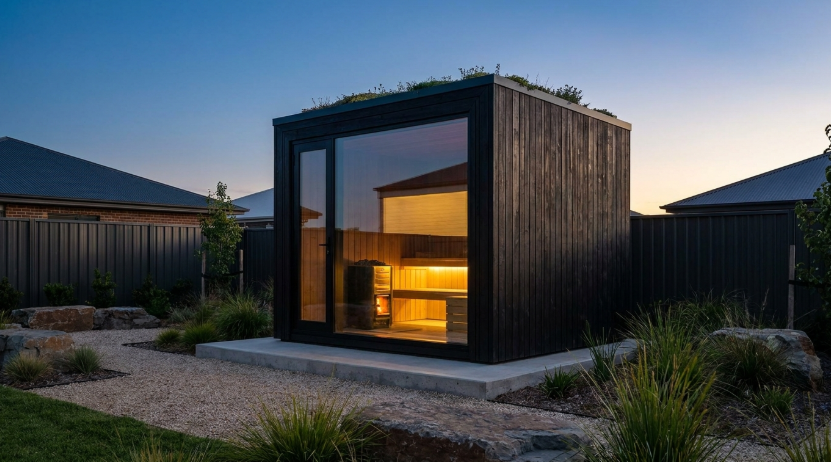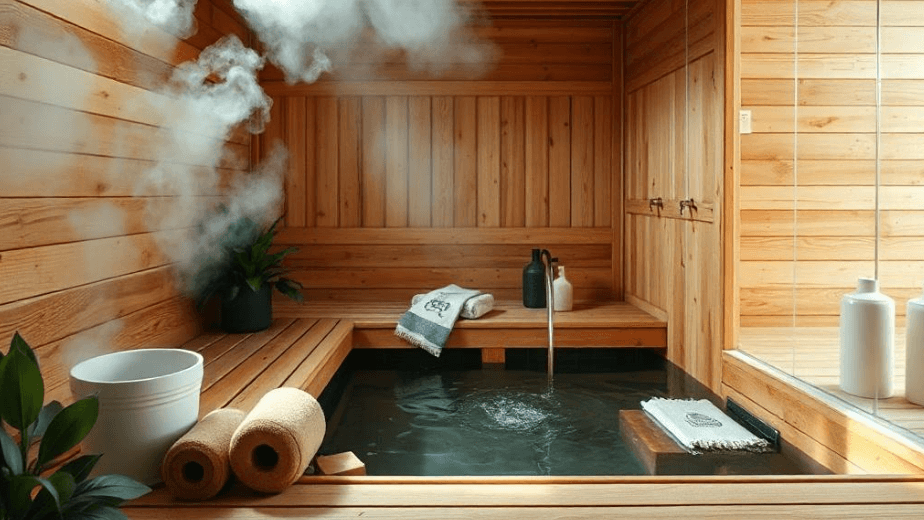

For this sauna sizing & build guide, the useful answer is practical: what makes the setup safe, comfortable, easy to maintain, and worth using when the novelty wears off.
Last October I helped my neighbor Dave unload a pallet of pre-cut cedar panels from a freight truck parked sideways in his cul-de-sac in Duluth. He’d bought a barrel sauna kit online, watched exactly one YouTube walkthrough, and had his brother-in-law flying in Friday night to help assemble it over the weekend. By Sunday afternoon the thing was standing on a gravel pad behind his garage, looking like it had always been there. The part that almost derailed the whole project wasn’t the build. It was the 240V electrical run he hadn’t budgeted for, which took another two weeks and $1,400 once a licensed electrician could fit him in.
Dave’s experience is the template for how most of these purchases actually go. The kit itself is the easy part. The site prep, the wiring, and the unsexy planning are where people either save money or light it on fire (sometimes literally, in the case of bad electrical work). So let’s talk about what a pre-cut, pre-drilled sauna kit actually involves, what it costs when you count everything, and whether the wellness claims hold up.
What You’re Actually Buying (and What You’re Not)
A sauna kit in this category typically ships as numbered tongue-and-groove panels, pre-drilled fasteners, pre-cut benches, a heater, and a basic stove guard. Two people with a drill, a level, and a weekend can handle the framing and assembly. The advertised “6 to 12 hour build” is roughly accurate for a barrel or small cabin, assuming you’ve read the instructions and aren’t improvising.
What you’re not buying is the pad, the electrical circuit, the permit, or (often) the interior accessories like a bucket, ladle, or thermometer. Those feel like small line items until they add up.
The spec sheet is where most buyers either do their homework or skip it and regret it. A few things to actually look at:
Wood species and joinery. Cedar, hemlock, thermo-aspen, and redwood are the standards for a reason: they handle heat cycling without warping or splitting. Cheap kits skip tongue-and-groove cladding and use butt joints sealed with felt. Those builds leak heat and look rough within two seasons. If the listing doesn’t specify the joinery, that’s your answer.
Heater sizing. Match the heater’s kW rating to the cabin volume. Undersized heaters run nonstop and burn out early. Oversized heaters short-cycle and waste electricity. The manufacturer’s sizing chart is more reliable than a Reddit thread.
Cold plunge specs (if you’re going that route). Check chiller horsepower, filtration micron rating, and whether sanitation is ozone, UV, or both. A 1/3 HP chiller can hold 50°F in a small insulated tub in a temperate garage. Try that same chiller in a Phoenix garage in August and you’ll be disappointed.
The Pad, the Wire, and the Permit
This is the section people want to skip. Don’t.
Pad. A 4-inch compacted gravel pad with a drainage layer works fine for a barrel unit on flat ground. For a cabin sauna in a cold or wet climate, a 4-inch reinforced concrete slab is the better call, running about $4 to $7 per square foot installed. A pad that settles after the unit is sitting on top of it is a problem you really don’t want to solve retroactively.
Electrical. A typical traditional sauna heater pulls 4.5 to 9 kW on a dedicated 240V circuit at 30 to 50 amps. This is not a “watch a video and wing it” situation. A licensed electrician should run the circuit, size the breaker, tie into your main panel, and pull the permit. This is how you avoid the kinds of outcomes that show up on your local news. Seriously.
Ventilation. Outdoor builds need an intake vent under the heater and an adjustable exhaust on the opposite wall near the ceiling. Indoor builds usually need a passive vent to the outside or a properly sized exhaust fan. Skipping ventilation makes the sauna feel stuffy and can accelerate wood degradation.
Permits. Some counties exempt detached structures under 200 square feet from a building permit. The electrical permit for a 240V circuit is almost always required regardless. Call your local building department before you order the kit. A five-minute phone call can save you weeks of headache.
Does the Research Back Up the Hype?
The short answer: for traditional (Finnish-style) sauna use, the evidence is more solid than most people expect.
The most cited study is the Laukkanen 2015 cohort published in JAMA Internal Medicine. Researchers followed 2,315 middle-aged Finnish men for 20 years and found a dose-response relationship between sauna frequency and reduced cardiovascular mortality. Men using a sauna 4 to 7 times per week saw roughly half the cardiovascular mortality of those using it once a week. That’s a striking finding, though it comes with the usual caveats about observational data and the fact that Finnish men who sauna daily may differ from the general population in other health-relevant ways.
A 2018 follow-up in BMC Medicine from the same research group reported lower dementia incidence at the highest sauna frequencies. The plausible mechanisms include heat acclimation, improved endothelial function, and a heart-rate response that resembles moderate-intensity exercise.
For a home user, a reasonable starting protocol is 20-minute sessions at 170°F to 195°F, two to four times per week. Hydrate before and after. Step out if you feel lightheaded. That’s it. No complicated biohacking stack required.
Anyone with a cardiac history, uncontrolled blood pressure, or who is pregnant should talk to a physician before starting. This isn’t a pro-forma disclaimer; heat stress is real cardiovascular load.
What It Actually Costs, All In
The sticker price on a kit is not your all-in number. Here’s what the real budget looks like:
Sauna kits: $2,490 for an entry-level barrel, $6,000 to $10,000 for a mid-tier cabin with a quality heater, $12,000 to $16,980 for a panoramic glass-front or premium thermo-aspen build.
Site work: $400 to $900 for a gravel pad, $1,200 to $2,400 for a concrete pad, $600 to $1,800 for a 240V electrical run (varies wildly by distance from your panel and local labor rates).
Cold plunge (if applicable): $4,500 to $7,500 for a residential insulated tub with an integrated chiller, $9,000 to $14,000 for a commercial-grade stainless build with full filtration. Stock-tank DIY setups land closer to $400 to $900 but you’re buying and hauling ice manually, which gets old fast.
Appraisers don’t add dollar-for-dollar return on a sauna, but a well-built outdoor wellness setup is increasingly treated as a selling feature in Northeast and Pacific Northwest markets. Think of it less like a pool (which can actually hurt resale in some areas) and more like a finished deck: it won’t make you money, but it removes an objection.
HSA/FSA eligibility: A residential sauna is rarely eligible unless a clinician issues a Letter of Medical Necessity for a documented condition. This is patient-specific and depends on your plan administrator. Talk to your tax advisor before assuming a purchase qualifies.
Barrel vs. Cabin vs. Infrared vs. Cold Plunge
The boring truth is that the “best” option depends on your space, your climate, and the routine you’ll actually stick with.
An outdoor barrel sauna heats in 25 to 35 minutes and lives on a small pad. It’s the lowest-friction option for most backyards. An indoor cabin heats faster but eats living space and requires proper venting. An infrared cabin runs at lower temperatures (120°F to 150°F) and plugs into a standard outlet, but it produces a fundamentally different physiological response than a traditional sauna. Comparing the two is a bit like comparing a brisk walk to a jog: both are good, but they’re not interchangeable.
Purpose-built cold plunge tubs with a 1 HP chiller hold 39°F to 45°F all day. A chest-freezer conversion is cheap but lacks filtration and sits in mechanically questionable territory. I’ve seen a few that work fine for years. I’ve seen more that grow things you’d rather not think about.
For a longer comparison of actual model lineups and price tiers, see this sauna sizing & build guide. It breaks down sizing, wood species, heater wattage, and install considerations in plain language, and it’s the kind of reference page worth bookmarking before you commit to a build.
Three Moments to Call a Pro
You can DIY most of a sauna kit build. But there are three specific points where spending money on a professional is not optional (or at least shouldn’t be).
The electrician. Any 240V circuit. Period. This applies to most traditional sauna heaters and commercial-grade cold plunge chillers. A licensed pro pulls the permit, sizes the breaker, and ties safely into your panel.
The pad work. Especially in freeze-thaw climates or on soft, poorly draining soil. A contractor who pours pads regularly will get the grade and compaction right the first time.
Your doctor. If you have an arrhythmia, uncontrolled hypertension, a recent cardiac event, Raynaud’s phenomenon, are pregnant, or are managing a chronic condition, a 10-minute conversation with your physician is the correct first step before starting any sauna or cold plunge routine. The Laukkanen data is encouraging for healthy adults, but “healthy adults” is doing a lot of work in that sentence.
FAQs
Is a sauna kit safe during pregnancy?
Pregnant adults should not start a new sauna or cold plunge routine without explicit clearance from their OB-GYN. Core temperature changes carry real fetal risks, particularly in early pregnancy.
How loud is a sauna kit?
A traditional sauna heater is silent in operation. A cold plunge chiller runs at roughly 45 to 55 dB at one meter, comparable to a quiet conversation. Consider placement relative to neighbor windows and bedrooms.
Can I run a sauna kit year-round in cold climates?
Yes, with planning. Outdoor saunas are designed for cold weather and benefit from a longer pre-heat schedule in winter. Cold plunge tubs with insulated walls and integrated chillers handle below-freezing ambient temps if the chiller’s rated operating range allows it. Check the manufacturer’s spec sheet for low-temperature performance.
What is the lifespan of a quality sauna kit?
A well-built cedar or thermo-aspen sauna lasts 15 to 25 years with light annual care (sanding benches, checking hardware, occasional exterior treatment). Heaters are usually replaced once during that span. Stainless steel cold plunge tubs last 15 to 20 years; chillers are typically replaced or rebuilt every 6 to 10 years.
Do I need a permit for a sauna kit?
Some municipalities exempt detached structures under 200 square feet from a building permit. The electrical permit for a 240V circuit is almost always required. Call your local building department before ordering.
Disclaimer. This article is general consumer information, not medical advice. Heat and cold therapies carry real cardiovascular load. Anyone with arrhythmias, uncontrolled hypertension, Raynaud’s phenomenon, recent cardiac events, or who is pregnant should consult a physician before starting any new sauna or cold plunge routine.
Any 240V electrical work should be completed by a licensed electrician under the appropriate local permit.
HSA and FSA reimbursement on wellness equipment is patient-specific and depends on a Letter of Medical Necessity from a clinician. Talk to your tax advisor before assuming a purchase qualifies.


 By
By